When the FAITHUSTLE Forgets the People
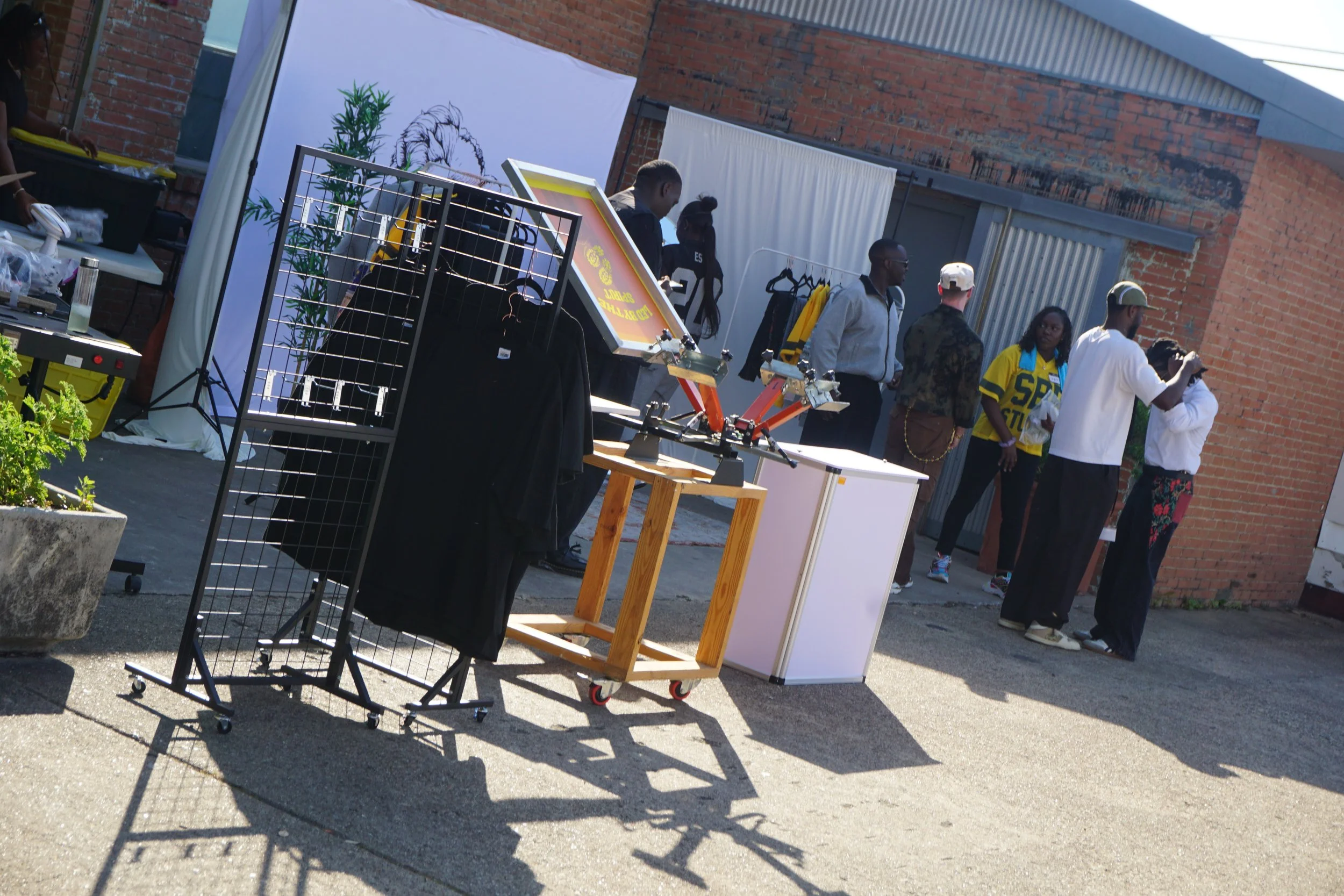
Vendors Setting Up
When the FAITHUSTLE Forgets the People
A Reflection on Faith, Hospitality, and the Cost of Being Seen
When the “church” commodifies people and forgets to remember that the church are His people and the people are the sheep of His pasture.
Those words lingered long after the evening ended.
I arrived at the collaborative FAITHUSTLE x Scary But Beautiful: The Meet Up, carrying a sense of anticipation. The event had been promoted as “A special night for Christian entrepreneurs and creatives. A curated space for authentic conversations around faith, business, creativity, leadership and purpose. A room designed to help you meet like minded builders and to hear from leaders who have done it God’s way.”
It sounded like the kind of gathering where faith and community would intersect.
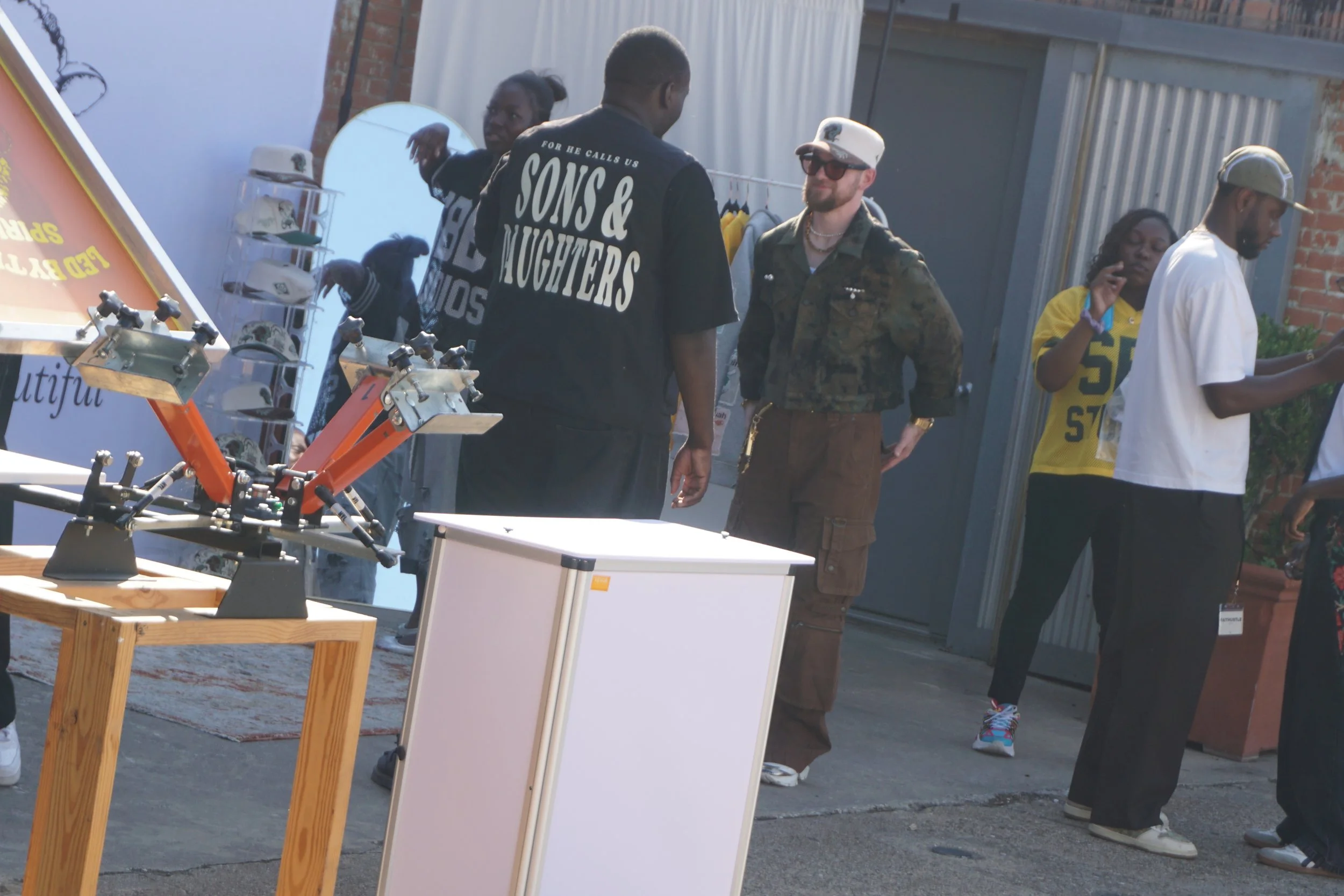
Vendors and Ty Headlee
I traveled 31 miles by Uber, arriving early in nearly 90-degree weather. Gospel music filled my headphones during the ride as I reflected on what the evening might become. The event marketing highlighted speakers Toure Roberts and Tim Ross, with worship led by Ryan Ofei. While I knew Ty Headlee had promoted the event, I did not expect to see him there because his participation was not listed in the event description.
Upon arrival, vendors appeared to still be setting up. I began documenting the environment through photographs and noticed Headlee among the vendor area in the courtyard.
Soon after, I was greeted by a young woman named Anna.
She was warm, welcoming, and gracious.
After asking whether I was a photographer, I answered yes. She introduced herself and escorted me into the venue. Inside, chairs had already been arranged and a few people sat among the activity and preparation. Anna led me toward a countertop where event lanyards were being distributed.
That is when the experience changed.
Standing nearby was Mukwenda Kandole.
As Anna handed me a lanyard, Kandole immediately questioned who I was.
I introduced myself.
“Ezra Jones.”
He asked who I was with.
“The Fstate.”
His expression remained unchanged.
“TheFstate Magazine.”
This, time his face scrunched and snarled with a stare.
He asked how I heard about the event.
“Social media.”
How did I apply?
“Online through Eventbrite.”
He was adamant that there was no link.
Anna mentioned that I was a photographer.
His response was immediate.
“He said no he’s not familiar because he would know he made the list.”
His demeanor suggested frustration. He took the lanyard from my hand and stated:
“We don’t need your services.”
The interaction was abrupt, dismissive, and deeply uncomfortable.
Anna remained kind throughout the exchange. She acknowledged that I had purchased a ticket and escorted me back outside, explaining that official check-in would happen in the courtyard.
Attempting to maintain composure, I stood outside processing what had just occurred.
Shortly afterward, a man approached and introduced himself as Antoine. We exchanged names and had a brief conversation. As he walked away, I noticed a lanyard on the ground.
I called out to him.
“I think someone dropped their lanyard.”
He picked it up and replied that it belonged to him. I noticed the word Security printed across it.
As I shifted position slightly, he made a point of reminding me that I could not go inside, despite the fact that I wasn’t making an attempt to do so and only entered the first time upon the invitation of Anna.
By this point, disappointment had become silent rage and restraint.
I called a friend for perspective.
His response was immediate.
“We’re too old for this.” Indicating he doesn’t accept disrespect exclaiming to leave.
Earlier that day we had discussed two networking events I planned to attend. One happened to be this Christian-focused gathering. When I explained what had occurred, he found the experience difficult to reconcile with the event’s stated mission.
Ironically, another event I had attended recently was not marketed as Christian at all, yet the environment had been far more welcoming. The owner was gracious, approachable, and intentional about creating connection.
The stark contrast was difficult to ignore.
One event openly centered itself around faith, Christianity, and creativity.
The other simply practiced hospitality.
Eventually, I decided it would be unfair to leave without communicating my concerns and allowing an opportunity for resolution.
I asked someone who either appeared to be a staff member or volunteer to locate Antoine… “Howard?” She replied and I said “yes.”
She politely walked away seeking to find Antoine.
After several minutes, Antoine Howard appeared near the entrance outside the courtyard. He stood there for a time, seemingly searching for me despite my being clearly visible and separated from the crowd.
As he moved in my direction, he first stopped to engage a group of women who appeared to be volunteers or staff members. One mentioned that he looked familiar. Howard referenced a fitness club and advertisements while continuing the conversation.
I waited patiently.
When the exchange ended, I turned directly toward him, making it clear I wished to speak.
He asked if I was leaving.
I said yes.
He asked what was wrong.
I explained that based on the event’s mission and messaging, I was disappointed by the treatment I had received. He asked whether I believed their behavior was preventative in nature.
I responded:
“no.”
Preventative action has a place when someone exhibits signs of aggression, disruption, or genuine risk.
None of those conditions existed.
I had arrived early.
I had purchased a ticket prior to my arrival.
I was calm and respectful even while being dismissed and treated poorly.
I was simply there to attend, to take part in what I thought the event stood for and to document the experience as someone who often highlights events involving creatives.
Howard offered an apology. Yet the apology felt procedural rather than restorative. He explained that the event was still new and that disappointing attendees was not their intention.
He also asked whether he had treated me poorly. Based solely on our brief conversations at the time, I answered no.
Looking back, however, I would retract that statement.
Not because of what was said.
Because of what was not done.
There was no urgency to correct the situation.
There was no effort to personally assist with check-in.
There was not even an attempt to verify my ticket.
There was no invitation to remain.
There was no meaningful effort to restore trust.
People remember how you make them feel. And what I remember feeling was unseen, not considered, and ultimately dismissed.
What troubles me most is not merely my own experience. I think about those who may arrive carrying similar or even far heavier burdens than I do, people navigating loneliness, rejection, trauma, suicidal ideation, or the aftermath of sexual assault. A moment that feels small to one person can become devastating to another.
The irony is difficult to overlook.
An event positioned as a reflection of faith left me feeling disconnected from the very community it claimed to gather.
The money spent felt like more than a financial loss. The opportunity for connection was lost. The value promised by the experience was lost.
The first impression stained.
Yet perhaps the most important lesson was not about the event at all.
It was about people.
A lesson I know all too well.
People fail.
Organizations fail.
Leaders fail.
Attendees fail.
I fail.
The danger comes when we allow the shortcomings of people to distort our understanding of God.
The church is not a brand.
It is not an event.
It is not a stage, a speaker lineup, a social media campaign, or a networking opportunity.
The church is God’s people.
And when people forget that truth, they risk turning ministry into transaction and community into commodity.
That is the deeper reflection I carried away from the evening.
Not that faith failed.
Not that God failed.
But that people do.
Don’t allow their shortcomings to sever you from the love of God.
I did reach out to Mukwenda Kandole, founder of FaithHustle, seeking comment for this story. No response was received.